Tree care in Streetsboro is not just about looks. It is about managing living structures that grow, shift, and respond to our weather, soil, and built environment. When trimming gets postponed for a few years, the problems usually do not appear overnight. They build quietly in the background, then show up all at once as a broken limb over a driveway, a roof puncture in a storm, or a tree that has to be removed instead of restored.
Owners often call a tree service only when something is clearly wrong. From years of working with both homeowners and business properties, I can say that the best results, and the lowest lifetime costs, come from steady, regular trimming long before trouble is obvious.
This is especially true in a place like Streetsboro, where lake effect weather, heavy spring rains, and winter ice all stress trees in different ways.
How Streetsboro’s climate shapes your trees
If you live or work in Streetsboro, you know the rhythm of the seasons. Trees know it too, and they respond strongly.
Spring pushes rapid growth. Trees put out long, thin branches and dense leaf cover, sometimes faster than the underlying structure can safely support. By midsummer, branches may already be overextended over roofs, driveways, and parking lots.
Summer storms, with gusty winds and saturated soil, tug at every weak union and overextended limb. A branch that seemed fine in June can be twisted to breaking point in July. Then, a few months later, ice and wet snow load those same limbs again from the opposite direction.
Over several years, this cycle creates:
- long, unbalanced branches that lean over structures or walkways tightly packed canopies with poor airflow, perfect for fungal problems crossing and rubbing branches that create weak spots and decay
Regular tree trimming interrupts that cycle before it turns into structural failure. A professional tree service in Streetsboro will look at how your trees are shaped relative to this climate, and cut with the local conditions in mind, not from a generic handbook.
Health benefits you do not always see from the ground
People tend to notice the cosmetic side of tree trimming first. The canopy looks cleaner, the house gets more light, the lawn fills in. The more important benefits are often hidden inside the tree.
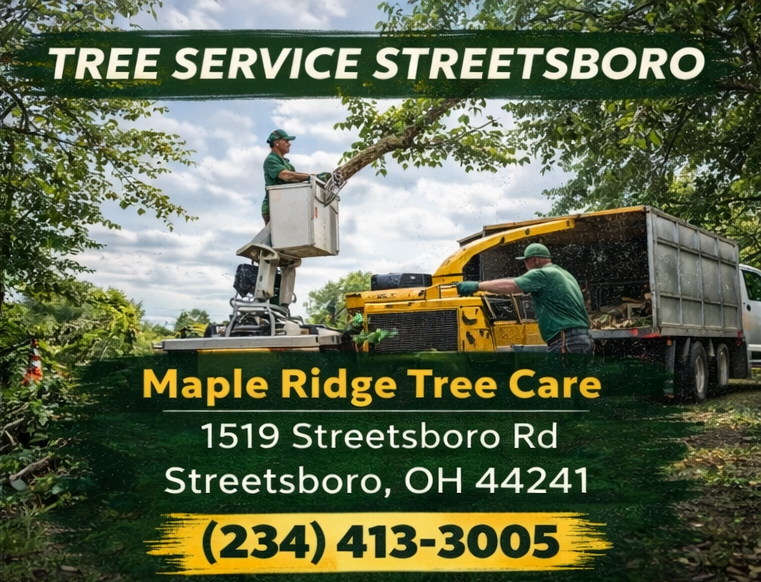
Every proper trim gives a tree removal service one less future customer. That sounds odd from the outside, but anyone who has worked in tree care for a while can tell you: trees that are pruned correctly and consistently are far less likely to reach the point where removal is the only safe option.
Several health effects show up again and again.
Better structure from a young age
Young trees are surprisingly forgiving. A knowledgeable crew can correct poor branching, reduce co-dominant stems, and encourage one strong leader. If this happens in the first ten years of a tree’s life, you can avoid decades of expensive mitigation later.
I have seen maples that were ignored for the first 15 years, then suddenly started shedding limbs over driveways. At that stage, you are often dealing with heavy reduction cuts, support cables, or partial removal. The cost of regular light trimming during those first years would have been a fraction of the emergency work later.
Reduced disease and decay
When you thin a canopy properly, you increase air flow and sunlight penetration. That surface level change pays off internally. Fungi and many pests thrive in shaded, damp, overcrowded conditions. A thoughtful trimming plan reduces those conditions without stripping the tree bare.
The key is making clean cuts in the right place. Random topping or hacking limbs back to stubs does the opposite of what you want. It confuses the tree, stresses it, and invites decay at every bad cut. A professional tree service like Maple Ridge Tree Care in Streetsboro should be using modern pruning standards, not the old habit of flat topping.
If you see stubs left behind, or big limbs cut at waist height just to clear a view, that is not pruning. That is slow damage. Good trimming removes entire branches at their origin or back to a healthy lateral limb, so the tree can compartmentalize the wound and seal it effectively.
Less internal stress, fewer surprise failures
Trees balance weight and energy without our help, but they do not account for the weight of an icy winter on a low limb over your garage or the wind tunneling between two commercial buildings. Regular trimming gives the tree a structure that can stand up to those artificial stresses.
By shortening overly long branches, removing competing limbs, and correcting weak angles, a Streetsboro tree service is essentially coaching the tree into a sturdier posture. You might not notice anything dramatic after a light prune, but three years later, during a storm, the difference can be the limb that moves safely in the wind instead of snapping.
Safety and liability for homes and businesses
Most people who call for tree removal in Streetsboro did not budget for that expense. They call because something just failed, or looks like it might fail soon. That is especially true for businesses, where a fallen limb is not only a cleanup job but a liability event.
What “risk” actually looks like on a tree
Hazard is not only about dead limbs. A green branch can be just as dangerous as a dead one if it is large, poorly attached, and over a target such as a roof, path, or parking area. Tree risk assessment looks at three pieces: the defect, the size of the part that might fail, and the likelihood that it will hit something or someone.
Regular tree trimming allows an arborist to slowly reduce that risk profile. They can:
Remove dead or dying wood before it drops on its own. Gradually shorten or lighten overextended limbs over critical areas. Thin and re-balance canopies so weight is distributed more evenly.When this is done routinely, each visit involves relatively minor cuts. If trimming is skipped for a decade, you often end up with few good options other than heavy reduction or full tree removal.
Property damage and insurance realities
From a practical standpoint, many homeowner and commercial policies look at whether damage was “sudden and accidental” or a result of neglect. An insurer might cover roof damage from a storm blown limb, but you will still carry the deductible and the hassle of repairs at an inconvenient time.
On commercial properties in Streetsboro, I have seen untreated tree issues lead to:
- broken windshields in staff parking areas damaged signage from falling limbs blocked entrances after summer storms trip hazards where roots heaved sidewalks, then large branches obscured the view
A modest trimming program is usually cheaper than one serious incident, especially when you factor in lost business during cleanup.
Appearance, light, and curb appeal
People do judge properties by their trees, even if they do not realize it. A mature tree in good condition gives a feeling of stability and care. A neglected tree with dead limbs and sparse foliage creates the opposite impression.
For Streetsboro homes, regular tree trimming can:
- open up views without removing the tree increase natural light into living spaces help grass and plantings under the canopy get enough sun to thrive
On commercial sites, especially along State Route 14 or near busy corridors, neatly trimmed trees frame signage and storefronts. They make parking lots feel more inviting, not like dark, overgrown corners people want to avoid.
I have seen small improvements, like raising the canopy over a sidewalk and cleaning out dead wood, change how a property feels when you walk up to it. People notice that without consciously thinking, “The tree trimming here looks professional.”
Sunlight, shade, and managing your energy bills
Tree trimming does not only affect how a place looks. It changes how the building itself behaves, especially with heating and cooling.
In a Streetsboro summer, a large, leafy maple on the south or west side of a house can reduce solar heat gain significantly. That saves money on air conditioning and makes interior rooms more comfortable. The trick is keeping the shade without turning the interior into a dark cave.
Selective thinning lets dappled light filter through while still blocking the harshest sun. Instead of cutting the tree back hard near the roofline every few years, a tree service can maintain a layered canopy that shades upper walls and windows yet allows patches of sun.
In winter, when the leaves are gone, properly trimmed deciduous trees allow more sunlight to reach the building, adding passive heat during cold, bright days. Evergreen trees close to the house are a different story. They can act as windbreaks, but if they are too dense, they can keep areas damp and icy. Strategic trimming on those evergreens can reduce snow loading on branches near pathways and improve winter safety.
Businesses in Streetsboro that manage large paved areas also rely on tree canopy to reduce the heat island effect in summer. Parking lots with properly trimmed shade trees stay cooler, which is easier on pavement, vehicles, and visitors. But neglect can lead to low, heavy branches interfering with trucks, delivery vehicles, and visibility. That balance of clearance, shade, and structure is precisely what regular trimming is meant to handle.
When trimming avoids full tree removal
Many property owners are surprised when a tree removal service recommends pruning instead of cutting the tree down. The assumption is often that a tree is either “fine” or “needs to go.” There is a wide space in between.
Here are some real patterns where trimming has extended useful life instead of sending a tree straight to the chipper.
A large limb extends over a roof, but the trunk and root system are healthy. With careful reduction over two or three trimming cycles, the overextended section can be shortened and rebalanced. The risk drops while the tree remains.
A tree has some internal decay at the base, but not enough to warrant immediate removal. By reducing the upper canopy load and addressing structural issues higher up, you can often buy several safe years while monitoring the trunk.
A commercial property has row plantings that are too dense, and trees are competing, leaning, and crossing. Some light structural trimming and selective removal of a few poorly placed trees can save the majority. If no action is taken, wind or snow will likely “thin” them in a much less controlled Maple Ridge Tree Care pruning way.
Tree removal in Streetsboro is sometimes unavoidable, especially with large ash trees heavily affected by emerald ash borer, or with trees that have serious root damage from construction. Still, a routine trimming relationship with a local tree service often catches problems while they are still manageable.
Specific advantages for businesses and commercial sites
Homeowners think about aesthetics, shade, and personal safety. Business and commercial property managers have another layer on top of that: consistent operations.
A retail plaza does not want unplanned closures because of blocked entrances. An industrial park cannot have branches brushing delivery trucks or obscuring security cameras. Regular tree service on a set schedule turns tree care from a reactive headache into a predictable maintenance line item.
The benefits for commercial properties in Streetsboro include:
Safer access routes for customers, employees, and delivery vehicles. Clear visibility of entrances, storefronts, security lighting, and cameras. Reduced emergency callouts after storms, because weak limbs were removed proactively. A more professional, maintained look that supports brand image.Many businesses partner with a provider like Maple Ridge Tree Care on a recurring basis, often aligning trimming with quieter seasons for their operations. That way, any short-term disruption happens when it hurts least, not in the middle of a busy weekend or peak shipping period.
How often should trees be trimmed in Streetsboro?
There is no universal calendar that fits every tree, but there are reasonable ranges and patterns that work well in Portage County’s climate.
Most mature shade trees benefit from an inspection and light trimming every 2 to 5 years. Faster growing species, like silver maple or willow, often lean toward the shorter end of that range, while slower growers, like oaks, may go a bit longer between trims as long as they are healthy and not over structures.
Young trees, especially during the first decade, often need more frequent attention, not heavy cuts, but small structural corrections every couple of years. Those early adjustments set the framework that will support decades of growth.
Pruning during late winter or early spring, before leaf out, is common because branch structure is easier to see and certain disease risks are lower. However, dead wood removal, clearance trimming over roofs, and hazard mitigation can be done year round, as needed. A professional tree service in Streetsboro will schedule based on both biology and logistics, balancing ideal timing with real world needs.
A practical seasonal checklist for Streetsboro property owners
Used as one of the two allowed lists.
Here is a simple way to think about tree care across the year. It will not replace a professional inspection, but it helps you notice trends early.
Late winter: Walk your property on a clear day and look for dead tops, broken limbs from snow or ice, and trees leaning more than they used to. Note any branches close to roofs or power lines. Spring: After leaf out, watch for sections that stay bare or leaf out much later than the rest of the tree. That can signal dieback or root issues. Summer: During or after storms, notice how branches move. Limbs that whip dramatically while others flex smoothly may be overextended or weakly attached. Fall: As leaves drop, check the ground for fungal fruiting bodies near the base of trunks and for cracks or cavities revealed once foliage is gone. Any time: Pay attention to practical annoyances, like branches scraping vehicles, obscuring street views, or shedding small dead wood constantly. Those annoyances are often the first sign that trimming is overdue.If any of these observations raise concern, it is time to call a tree service in Streetsboro for an assessment.
What to expect from a professional tree trimming service
Good tree trimming looks almost boring while it is happening. There are no dramatic toppling moments, no huge crown reductions in a single day. Instead, you see careful movement, systematic removal of smaller branches, and a lot of time spent in the canopy, not just hacking from the ground.
When you hire a company like Maple Ridge Tree Care or another reputable tree service Streetsboro property owners trust, you should expect:
- a walk around the property, with specific trees and concerns discussed clear explanations of which branches will be removed and why attention to drop zones, with lawn and hardscapes protected as practical an emphasis on structure, not just quick clearance of whatever is in the way
Cost will vary based on tree size, access, equipment needed, and complexity. As a rough mental model, several moderate sized trees trimmed on a single residential lot will usually be less expensive than an urgent single tree removal. On commercial sites, annual or biannual contracts often spread the investment out more predictably than sporadic large projects after problems accumulate.
When trimming is not enough
For balance, it is important to acknowledge the edge cases where regular trimming will not solve the underlying issue.
A tree with serious root girdling, major trunk decay, or severe lean over a structure is sometimes beyond what pruning can safely correct. No ethical arborist will recommend light trimming when they know that the base is compromised. In those situations, full tree removal in Streetsboro is the hard but responsible choice.
There are also invasive or structurally poor species that may never perform well in certain locations, no matter how often you trim them. For example, a fast growing, weak wooded tree planted under power lines or directly beside a foundation may always be a problem. Once it reaches a certain size, it can make more sense to remove and replant with a more appropriate species than to fight its growth habit for the next twenty years.
The value of a long term relationship with a tree service is that you are not getting advice based on a single visit. Over time, patterns emerge, and you can plan removals, plantings, and trimming together, rather than being surprised every few years.
Turning a chore into routine maintenance
Regular tree trimming is one of those tasks people tend to delay because the trees look “fine enough.” The benefits are cumulative and preventative, which makes them easy to undervalue until you experience the downside of neglect.
For Streetsboro homes and businesses, setting a simple pattern helps: a full professional evaluation every few years, light trimming to maintain structure and clearance, and a willingness to remove only when truly necessary. With that approach, your trees become assets that appreciate over time, rather than ticking hazards you hope will last another season.
Working with a consistent provider, such as a local tree service like Maple Ridge Tree Care, you can match that pattern to your specific property, soil, and microclimate. The result is not only healthier trees, but calmer storm seasons, fewer surprise expenses, and properties that look and feel well cared for every day of the year.